Choosing a centralized exchange for active trading or institutional deployment demands analysis of engine performance, liquidity depth, custody architecture, and regulatory compliance. This article presents a framework for evaluating exchanges based on technical and operational criteria rather than subjective rankings, then applies it to five widely adopted platforms. The goal is to surface decision relevant factors you can verify independently.
Evaluation Framework Components
Meaningful exchange comparison requires measuring attributes that directly impact execution quality and operational risk.
Matching engine throughput determines how many orders the system can process per second and how quickly it responds to market conditions. Exchanges publish order capacity figures, but sustained performance during volatility matters more than peak specs. Look for public incident reports or postmortems that describe how the system behaved during sharp price movements.
Maker and taker fee schedules follow tiered structures tied to 30 day volume. Most exchanges apply maker rebates above specific thresholds and reduce taker fees as volume increases. The breakpoints and percentages vary significantly. For comparison, calculate effective fees at your expected volume tier rather than headline rates.
Liquidity depth is measurable through orderbook snapshots. Pull the bid and ask depth at 1%, 2%, and 5% from midpoint for your target pairs during different market conditions. Depth fluctuates, so sample during both quiet and volatile periods. Exchanges with market making programs or significant institutional presence typically maintain tighter spreads and deeper books.
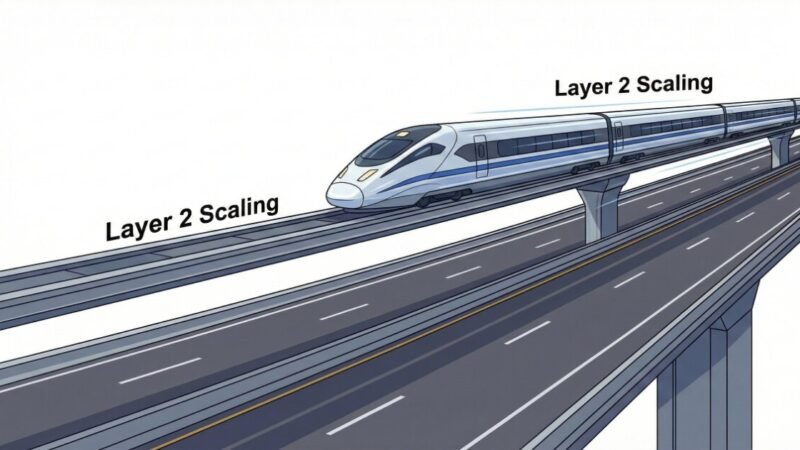
Settlement and withdrawal mechanics define how quickly you can move assets offchain. Some exchanges batch withdrawals at fixed intervals, others process continuously. Withdrawal limits apply per 24 hour window and often increase with KYC tier. Check whether the exchange supports native withdrawals to Layer 2 networks if you plan to move funds to Ethereum scaling solutions.
API rate limits constrain how many requests you can make per time window. Public endpoints typically allow 1,200 to 6,000 requests per minute depending on the exchange and endpoint type. Authenticated endpoints may have separate limits. If you run algorithmic strategies, confirm that rate limits accommodate your polling frequency and order update patterns.
Custody and Security Architecture
Centralized exchanges hold customer assets in hot wallets for operational liquidity and cold wallets for the majority of reserves. The ratio and the specifics of cold storage implementation are rarely disclosed in full detail.
Most major exchanges now publish proof of reserves attestations showing onchain wallet addresses and balances. These attestations verify that the exchange controls assets matching customer liabilities at a specific block height. Proof of reserves does not, however, confirm that the exchange is solvent or that it has no hidden liabilities. Cross reference published wallet addresses with onchain explorers to verify balances independently.
Withdrawal whitelisting and time delays add friction but reduce the impact of account compromise. Some exchanges allow you to lock withdrawals to preapproved addresses and require a waiting period before adding new addresses. If you manage significant balances, enabling these controls reduces the window an attacker has to drain funds.
Regulatory Jurisdiction and Compliance Posture
Exchanges operate under different regulatory frameworks depending on where they are incorporated and where they serve customers. U.S. based entities typically register with FinCEN as money services businesses and may hold state money transmitter licenses. Some also register with the SEC or CFTC depending on product offerings.
Offshore exchanges may impose geographic restrictions to avoid triggering registration requirements in specific jurisdictions. VPN blocking and IP geofencing are common. If you access an exchange from a restricted region, the platform may freeze withdrawals pending identity verification and documentation of your actual location.
Tax reporting obligations vary by jurisdiction. Exchanges serving U.S. customers generally issue Form 1099 for reportable transactions and provide transaction history exports. If you trade on multiple platforms, reconciling cost basis across them becomes your responsibility. Export trade history periodically rather than waiting until tax filing deadlines.
Worked Example: Comparing Execution Costs Across Platforms
Assume you plan to execute a 50 BTC purchase against USDT across multiple exchanges. You have verified that your 30 day volume qualifies you for the second fee tier on each platform.
Exchange A applies a 0.08% taker fee at this tier. The orderbook shows 12 BTC available within 0.1% of midpoint, 35 BTC within 0.3%, and full depth to cover your order within 0.5%. Expected slippage is approximately 0.25% based on weighted average price through the book. Total cost: 0.08% fee + 0.25% slippage = 0.33%.
Exchange B applies a 0.10% taker fee but maintains tighter spreads. Orderbook depth shows 30 BTC within 0.1% and full coverage within 0.25%. Expected slippage: 0.15%. Total cost: 0.10% + 0.15% = 0.25%.
Exchange C offers 0.06% taker fee but lower liquidity. Depth to cover 50 BTC extends to 0.6% from midpoint. Expected slippage: 0.40%. Total cost: 0.06% + 0.40% = 0.46%.
Exchange B delivers the lowest total execution cost despite higher fees because liquidity depth dominates the cost equation at this size. For smaller orders that execute entirely within tight spread bands, the fee schedule becomes more important. Run this calculation for your actual order sizes and pairs.
Five Representative Platforms
The following exchanges represent different architectural and operational approaches. Verify current details directly rather than relying on generalizations.
Binance operates the highest reported 24 hour volume across the most trading pairs. The matching engine supports spot, margin, futures, and options products. Fee tiers start at 0.10% maker and taker, declining to zero maker fees and 0.02% taker fees at the highest volume tier when paying fees in BNB. The platform offers native staking, lending, and liquid staking derivative products. Regulatory challenges in multiple jurisdictions have led to geographic restrictions and separate entity structures for different regions.
Coinbase maintains registration as a U.S. money transmitter and holds state licenses for operations. The platform targets retail and institutional customers with separate interfaces and custody solutions. Base fee tiers range from 0.40% down to 0.00% maker and 0.05% taker for volume above specific thresholds. Coinbase Pro and Advanced Trade interfaces provide orderbook access and lower fees than the consumer app. The exchange lists fewer pairs than competitors but applies stricter asset review processes.
Kraken serves both retail and institutional customers with spot and derivatives offerings. Fee schedules start at 0.16% maker and 0.26% taker, declining to 0.00% maker and 0.10% taker at higher tiers. The platform provides proof of reserves attestations and maintains registration in multiple jurisdictions including the U.S. Kraken supports staking for multiple proof of stake assets directly through the exchange interface.
Bybit focuses on derivatives trading with perpetual and futures contracts alongside spot markets. The platform applies volume based fee tiers starting at 0.10% maker and taker for spot, with separate fee schedules for derivatives. Bybit operates under offshore jurisdiction and restricts access from certain regions. The exchange offers unified margin accounts that allow collateral to back positions across multiple products.
OKX provides spot, margin, perpetual, futures, and options trading. Fee tiers range from 0.08% maker and 0.10% taker down to negative maker fees at the highest volumes. The platform includes a self custodial wallet product separate from the exchange account. OKX operates globally with regional restrictions and separate legal entities for different markets.
Common Mistakes and Misconfigurations
- Assuming posted volume equals available liquidity. Reported 24 hour volume includes wash trading and market making activity that does not represent executable depth. Always inspect the actual orderbook.
- Ignoring withdrawal batch processing schedules. Some exchanges process withdrawals every 4 to 8 hours rather than continuously. Factor this latency into liquidity management plans.
- Using market orders for large sizes. Market orders sweep the book until filled, which guarantees high slippage on thin orderbooks. Use limit orders or split execution across multiple orders.
- Mixing KYC tiers across accounts. Withdrawal limits and fee discounts apply per account. Creating multiple accounts does not multiply limits if they link to the same identity.
- Neglecting API key permission scopes. Restrict API keys to minimum required permissions. A key with withdrawal rights becomes a critical security vulnerability if leaked.
- Assuming proof of reserves equals solvency. Attestations show asset balances at a point in time but do not account for liabilities, loans, or off balance sheet obligations.
What to Verify Before You Rely on This
- Current fee schedules and volume tier breakpoints for your target trading pairs
- Orderbook depth at your typical order sizes during both calm and volatile market conditions
- Withdrawal processing times and any batching intervals that apply
- Supported withdrawal networks for each asset and associated fees
- API rate limits for both public and authenticated endpoints you plan to use
- Geographic restrictions and whether VPN access triggers compliance reviews
- Proof of reserves publication frequency and which assets are included
- Insurance fund size and coverage specifics for derivatives positions if applicable
- Staking or lending rates if you plan to earn yield on idle balances
- Tax reporting forms provided and transaction history export formats
Next Steps
- Export and archive complete transaction history from current exchanges before evaluating alternatives. Cost basis reconstruction becomes significantly harder without historical data.
- Set up read only API access on candidate platforms to monitor orderbook depth and fee calculations for your trading patterns over at least one week.
- Test the full deposit, trade, and withdrawal cycle with a small amount on any new platform before committing significant capital or building production integrations against their API.
Category: Crypto Exchanges