DeFi exchanges replace centralized order matching and custody with onchain protocols that allow users to trade directly from their wallets. These systems rely on liquidity pools, automated market makers, or onchain order books to execute trades without intermediaries. This article covers the core architectural patterns, transaction mechanics, failure modes, and verification steps for practitioners evaluating or integrating DeFi exchange protocols.
Core Exchange Architectures
DeFi exchanges implement three primary models. Automated market makers (AMMs) use liquidity pools where prices follow a mathematical curve, typically constant product (xy=k) or variants like concentrated liquidity. Orders execute against pool reserves, and liquidity providers earn fees proportional to their pool share. AMMs dominate by total value locked because they require no active market making.
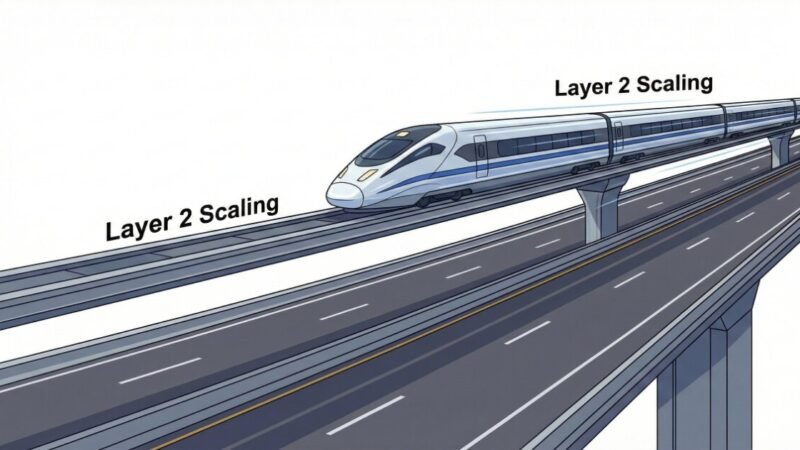
Onchain order books mirror traditional exchange mechanics but store limit orders in smart contract state. Each order creates a state entry; matching logic executes inside the contract. Gas costs make this model expensive for small trades, so implementations often batch updates or use layer 2 networks to reduce execution cost.
Request for quote (RFQ) systems broadcast trade intent to designated market makers who return signed quotes. The user selects a quote and submits it onchain for settlement. This hybrid model keeps price discovery offchain while settlement remains onchain, reducing gas usage and improving execution for larger sizes.
Liquidity Pool Mechanics and Price Impact
AMM pools set price algorithmically based on reserve ratios. When you swap token A for token B, you add A to the pool and remove B. The constant product formula requires that the product of reserves remains unchanged after fees. This creates slippage: larger trades relative to pool depth cause greater price movement.
Price impact compounds with pool imbalance. If a pool holds 100 ETH and 200,000 USDC, buying 10 ETH increases the ETH price nonlinearly because you are removing a significant fraction of the reserve. Arbitrageurs typically restore balance by trading in the opposite direction when external prices diverge, but this process is neither instant nor guaranteed during volatile periods.
Concentrated liquidity models let providers allocate capital to specific price ranges. This increases capital efficiency but introduces discrete liquidity boundaries. When price moves outside the active range, that liquidity becomes inactive. Trades crossing multiple ranges can face stepped slippage as they consume liquidity at each tier.
Transaction Flow and Settlement
A typical AMM swap begins when you approve the pool contract to spend your input token. The swap transaction calls the pool contract, which calculates output amount, applies the fee, transfers tokens, and emits an event log. The entire operation executes atomically: either all steps succeed or the transaction reverts.
MEV (maximum extractable value) affects settlement. Searchers monitor the mempool for pending swaps and may insert their own transactions before and after yours to profit from the price movement you create. Sandwich attacks buy before your trade (raising the price you pay) and sell immediately after (capturing the difference). This is not a protocol bug but an inherent consequence of transparent mempools and deterministic execution.
Frontrunning protection mechanisms include private mempools that hide transaction details until inclusion, slippage limits that revert trades exceeding a specified price deviation, and time delays that invalidate stale quotes. Each approach trades off between execution speed, privacy, and guaranteed settlement.
Router Contracts and Path Optimization
Routers aggregate liquidity across multiple pools to improve execution. Instead of swapping A to B in one pool, the router might split the order across three pools or route through an intermediate token (A to C to B) if that path offers better pricing.
Path selection depends on pool depth, fee tiers, and current reserve ratios. A router queries pool states offchain, calculates expected output for candidate paths, and encodes the optimal sequence in the transaction. Because pool states change between query and execution, routers include slippage checks to prevent execution at worse than expected prices.
Gas costs scale with path complexity. A direct swap might cost 100,000 gas, while a multihop route through four pools could exceed 400,000 gas. The router must balance price improvement against execution cost, particularly for smaller trades where gas can consume most of the potential savings.
Worked Example: Multihop Swap Execution
You want to swap 5,000 USDC for TOKEN on an AMM. The direct USDC/TOKEN pool has 50,000 USDC and 10,000 TOKEN. The router also finds a USDC/ETH pool (1M USDC, 500 ETH) and an ETH/TOKEN pool (100 ETH, 20,000 TOKEN).
Direct route: Using the constant product formula with a 0.3% fee, adding 5,000 USDC to the first pool yields approximately 909 TOKEN before fees, or 906 TOKEN after.
Multihop route: 5,000 USDC through the USDC/ETH pool yields 2.49 ETH. Routing that through ETH/TOKEN yields approximately 495 TOKEN. The direct route wins because the deeper intermediate pools do not offset the double fee burden.
The router executes the direct swap, setting a 1% slippage limit (minimum output: 897 TOKEN). If another transaction reduces pool reserves before yours executes, and your calculated output falls below 897, the transaction reverts.
Common Mistakes and Misconfigurations
- Setting slippage tolerance above 3 to 5% for routine trades exposes you to severe sandwich attacks. Searchers will maximize extraction up to your stated limit.
- Approving unlimited token spend (type(uint256).max) to pool contracts means a compromised contract or exploit can drain your entire balance. Approve only the amount needed per transaction or use wallet policies that expire approvals.
- Ignoring gas price relative to trade size. On layer 1 networks, executing a $100 swap during high congestion can cost $50+ in gas, turning a neutral trade into a substantial loss.
- Failing to account for token tax mechanisms. Some tokens deduct a percentage on transfer. The pool receives less than you sent, causing slippage calculations to fail or unexpected reverts.
- Treating simulation results as guaranteed. Frontrunning, block reorganizations, or state changes between simulation and execution can invalidate offchain calculations.
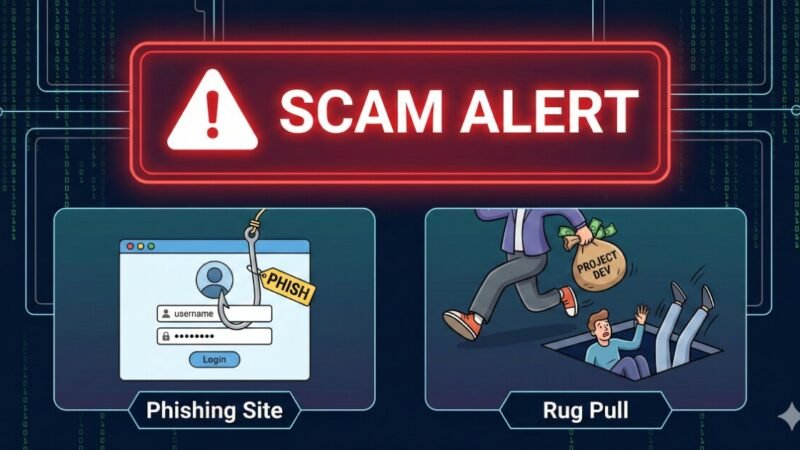
- Not verifying pool contract addresses. Scam pools mimic legitimate interfaces but contain malicious withdrawal functions or fake reserves.
What to Verify Before You Rely on This
- Current liquidity depth for your trading pairs. Pool reserves fluctuate continuously; a pool adequate yesterday may be drained today.
- Active fee tiers. Some protocols adjust fees algorithmically or allow governance to modify them. Confirm the current rate structure.
- Router contract versions and audit status. Protocol upgrades may introduce new routers; ensure you interact with the intended version.
- Token contract behavior. Check if the token implements transfer fees, rebasing mechanics, or blacklist functions that could cause unexpected failures.
- Gas price trends and network congestion. Verify current base fees and priority fees before submitting transactions, particularly for time sensitive trades.
- MEV protection availability. Confirm whether the protocol or your RPC provider offers private mempool access or other frontrunning mitigations.
- Oracle dependencies for advanced pool types. Concentrated liquidity and dynamic fee pools may rely on external price feeds. Verify oracle freshness and manipulation resistance.
- Withdrawal limits or cooldown periods in staking or farming contracts attached to the exchange. Earning mechanisms may lock liquidity temporarily.
- Network compatibility. Pools deployed on layer 2 or sidechains require bridged tokens; confirm token addresses match the correct network.
- Governance proposals affecting pool parameters. Active or pending votes may change fee structures, add new pairs, or alter incentive distributions.
Next Steps
- Test execution paths on a testnet or with minimal amounts to observe actual slippage, gas costs, and settlement times before committing significant capital.
- Integrate pool state monitoring into your workflow. Query reserve ratios and recent swap volumes to assess execution quality before submitting transactions.
- Evaluate alternative execution venues. Compare onchain AMMs, order books, and aggregators for your specific pair and size to identify the most efficient route for your use case.
Category: DeFi