Crypto exchanges vary substantially in custody model, order routing, fee structure, and regulatory posture. Selecting the right venue requires mapping your operational requirements (trade size, frequency, jurisdiction, asset support) against exchange characteristics that shift quarterly. This article outlines the technical and structural factors that differentiate venues, identifies common configuration pitfalls, and provides a decision framework for practitioners choosing where to route order flow.
Custody and Settlement Architecture
Centralized exchanges (CEXs) operate custodial wallets. When you deposit USDT, the exchange credits your account balance in its internal database and controls the private keys. Settlement occurs offchain within the exchange’s ledger. Withdrawals trigger an onchain transaction signed by the exchange’s hot or cold wallet infrastructure.
Decentralized exchanges (DEXs) execute swaps through smart contracts. Users retain custody until the moment of trade. Automated market maker (AMM) models like Uniswap or Curve pool liquidity onchain and calculate prices algorithmically. Order book DEXs like dYdX v3 or Serum match bids and asks but still settle through contracts, not custodial databases.
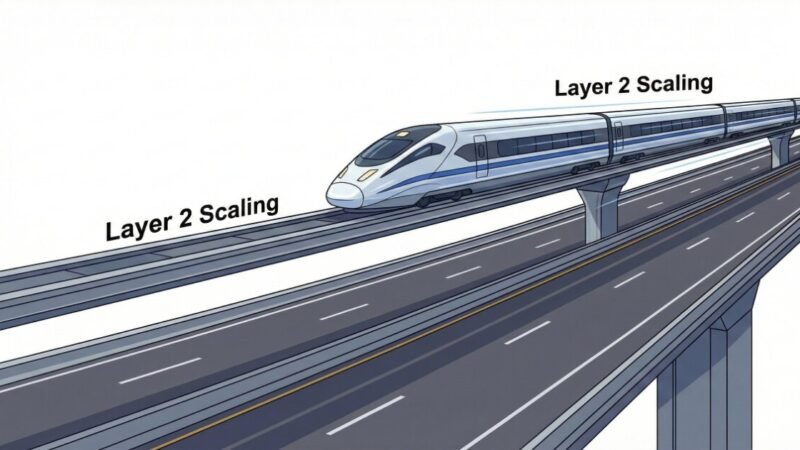
Hybrid models exist. Some CEXs offer noncustodial trading modes where private keys remain in browser wallets or hardware devices, with the exchange acting as an order matching layer. Others use layer two or sidechain infrastructure to batch settlement while maintaining centralized order books.
The custody distinction cascades into operational differences. CEXs enable instant portfolio margin and crosscollateralization because all assets sit in one ledger. DEXs require per-trade token approvals and gas payments. CEXs can implement complex order types (stop losses, iceberg orders, conditional fills) server-side. DEXs rely on the expressiveness of the underlying contract, which often limits order sophistication.
Fee Models and Liquidity Incentives
Most CEXs charge maker and taker fees as a percentage of notional trade value. Maker fees (paid when you add liquidity by placing limit orders that rest in the book) are lower than taker fees (paid when you remove liquidity with market orders). Fee tiers scale with 30 day volume, sometimes dropping to zero for market makers exceeding monthly thresholds in the millions of dollars.
DEX fees depend on protocol design. AMMs charge a swap fee (commonly 0.05% to 0.30%) distributed to liquidity providers. Some protocols add a protocol fee layer. Order book DEXs may charge taker fees only or split fees between validators and traders. Gas costs add a variable per-transaction expense that can dwarf protocol fees for small trades.
Withdrawal fees on CEXs are either flat (0.0005 BTC regardless of amount) or tiered by asset. Deposit fees are rare but exist for certain fiat rails. DEXs have no withdrawal fee concept since you never relinquish custody, but you pay gas to interact with contracts.
Some exchanges subsidize trading through token incentives (volume mining, staking rewards, or fee rebates paid in the platform’s native token). These programs shift quarterly and can invert the effective fee schedule. Verify current incentive terms before assuming net costs.
Regulatory Licensing and Geographic Access
Exchanges obtain licenses in jurisdictions where they operate fiat onramps or serve local users. A Money Services Business (MSB) registration in the United States, a Virtual Asset Service Provider (VASP) license in the European Union, or a Major Payment Institution license in Singapore each impose different compliance obligations.
Licensed venues enforce Know Your Customer (KYC) thresholds. Some allow small deposits and trades without verification but gate withdrawals or advanced features until identity documents are submitted. Others require KYC at account creation.
Unlicensed exchanges either restrict access by IP geolocation or accept all users with the legal risk offloaded onto the user. Decentralized frontends cannot enforce KYC at the protocol layer, though hosted interfaces may implement gating.
Regulatory scope affects asset listings. Exchanges licensed in jurisdictions with securities frameworks may delist tokens deemed securities under local tests. Margin and derivatives products face separate licensing regimes. Perpetual futures, options, and leveraged tokens are unavailable on some platforms in certain regions.
Check the exchange’s terms of service and jurisdiction blocklist before depositing. Platforms sometimes freeze accounts retroactively if geolocation evidence suggests terms violations, even if initial signup succeeded.
Order Execution and Market Structure
Centralized order books match bids and asks at discrete price levels. The exchange maintains a priority queue (price-time priority is standard) and executes trades when orders cross. Some venues use pro-rata matching or other allocation rules for resting liquidity at the same price.
Market depth and spread vary by asset and venue. Liquid pairs on major exchanges maintain tight spreads (0.01% or less on BTC/USDT). Illiquid altcoin pairs may show 1% to 5% spreads, making large market orders expensive.
AMM pricing follows bonding curves. Constant product models (x * y = k) generate slippage proportional to trade size relative to pool depth. Stableswap curves reduce slippage for correlated assets. Concentrated liquidity models let providers specify price ranges, increasing capital efficiency but fragmenting liquidity.
Some CEXs route orders to external liquidity providers or aggregate multiple internal liquidity pools. Order routing logic is opaque. You submit a market order; the exchange fills it from its own book, a market maker’s quote, or a combination, then reports the average fill price.
Smart order routing on aggregators like 1inch or Matcha splits trades across multiple DEXs to minimize slippage. The aggregator’s contract executes swaps sequentially or in parallel, depending on the route.
Margin and Derivatives Infrastructure
Spot exchanges separate from derivatives platforms in terms of settlement and risk. Perpetual futures contracts on CEXs use mark prices (typically a weighted average of spot index prices from multiple venues) to calculate unrealized profit and loss. Funding rates adjust every 8 hours to anchor the perpetual price to spot.
Isolated margin allocates collateral per position. If BTC/USDT longs liquidate, other positions remain unaffected. Cross margin pools all account equity, reducing liquidation risk but exposing the entire portfolio to one bad position.
Options venues list expiries and strikes. Cash settled options credit profit to your account at expiry. Physically settled options deliver the underlying asset. American options allow early exercise; European options settle only at expiry.
Derivatives on DEXs face oracle latency and liquidation execution risk. If the oracle updates every 60 seconds and price moves sharply between updates, liquidations may trigger late or miss underwater positions. Keepers compete to liquidate positions, introducing a timing game absent from CEX liquidation engines.
Asset Coverage and Chain Support
Major exchanges list 100 to 500 assets. Tier one assets (BTC, ETH, major stablecoins) are universal. Mid-cap tokens appear on most venues. Long tail altcoins may trade on only one or two platforms.
Chain support determines deposit and withdrawal paths. An exchange may list ETH but support only ERC20 deposits, blocking cheaper withdrawals over Arbitrum or Optimism. Native support for Solana, Avalanche, or Binance Smart Chain reduces bridging friction.
Wrapped tokens introduce dependencies. WBTC on Ethereum requires trust in the custodian holding BTC reserves. Exchanges sometimes list both native and wrapped versions, creating separate order books and liquidity fragmentation.
Token listings change. Exchanges delist assets due to low volume, regulatory concerns, or project abandonment. Verify that a specific asset is currently tradable before building workflows that depend on it.
Worked Example: Routing a $50,000 ETH Purchase
You need to convert 50,000 USDC to ETH. You check three venues.
CEX A shows a 0.10% taker fee. The order book has 15 ETH offered at $2,500 and 10 ETH at $2,501. Your 20 ETH market buy (50,000 / 2,500) fills the first level and part of the second. Average fill price is $2,500.33. Total cost: 50,006.60 USDC + 50.00 fee = 50,056.60 USDC.
CEX B shows a 0.05% taker fee but thinner liquidity. The top ask is $2,502 for 8 ETH, $2,504 for 12 ETH. Average fill climbs to $2,503.20. Total: 50,064.00 + 25.03 = 50,089.03 USDC.
Uniswap v3 has a concentrated liquidity pool with 300 ETH of depth in the current price range. The bonding curve calculates 0.08% slippage for a 20 ETH swap. You pay 0.05% protocol fee. Gas cost is $8 (0.000003 ETH at $2,500). Total: 50,040 USDC slippage + 25 fee + 8 gas = 50,073 USDC equivalent.
CEX A wins on execution cost. But if CEX A requires 24 hour withdrawal processing and Uniswap settles instantly, time value may shift the decision.
Common Mistakes and Misconfigurations
- Using market orders on illiquid pairs. Slippage can exceed 10% when depth thins. Limit orders protect against adverse fills but may not execute if the market moves.
- Ignoring withdrawal minimums and flat fees. Withdrawing 0.01 BTC with a 0.0005 BTC fee costs 5%. Consolidate withdrawals or choose exchanges with lower minimums for the asset.
- Assuming all stablecoins are equivalent. USDT, USDC, DAI, and BUSD trade at slight premiums or discounts depending on market conditions. Converting between them incurs swap fees and potential depeg risk.
- Overlooking chain confirmation requirements. Some exchanges credit deposits after 12 blockchain confirmations. Large ETH deposits during congestion may take 20+ minutes, delaying execution.
- Setting API keys with withdrawal permissions. If the key leaks, an attacker can drain the account. Use separate keys for trading and withdrawals, with IP whitelisting enabled.
- Failing to test small amounts first. Mistyping a memo field on a Binance Chain deposit or sending ERC20 tokens to a non-EVM address results in permanent loss.
What to Verify Before You Rely on This
- Current fee schedule and volume tier thresholds for the trading pairs you use.
- Withdrawal processing times (instant, manual review, or batched at fixed intervals).
- Supported deposit and withdrawal chains for each asset.
- KYC requirements and verification turnaround times if you need immediate access.
- Margin requirements and liquidation thresholds if trading with leverage.
- API rate limits and websocket subscription caps if building automated strategies.
- Insurance fund size or proof of reserves if custodial risk matters to your workflow.
- Jurisdiction blocklist and VPN policy in the terms of service.
- Current status of any token you plan to trade (ensure it is not suspended or in delisting review).
- Oracle sources and update frequency for derivatives platforms.
Next Steps
- Run parallel test deposits on two to three exchanges with small amounts to measure actual confirmation times and UI friction.
- Build a spreadsheet comparing all-in costs (fees, slippage, gas, withdrawal fees) for your typical trade sizes across candidate venues.
- Set up API monitoring for order book depth and spread on your target pairs to identify the venue with the most consistent liquidity during your active trading hours.
Category: Crypto Exchanges